

Urban living spaces and modern residential floor plans increasingly prioritize compact design, making efficient space management a top priority for homeowners and renters alike. The bedroom, which serves as a sanctuary for rest and personal retreat, often bears the brunt of storage shortages. Clothing, seasonal bedding, spare linens, and personal keepsakes quickly consume valuable closet and floor space.
Integrating a storage bed into your bedroom layout addresses spatial constraints directly. By utilizing the substantial, often underused footprint directly beneath the mattress, storage beds merge comfortable sleep infrastructure with high-capacity organizational solutions. Selecting the right storage bed requires understanding the different mechanisms available, evaluating frame construction materials, and assessing your specific lifestyle requirements.
Understanding Primary Storage Bed Mechanisms
Storage beds come in several distinct configurations, each offering unique advantages depending on your bedroom dimensions, clearance around the frame, and accessibility needs.
Hydraulic Lift-Up Ottoman Beds
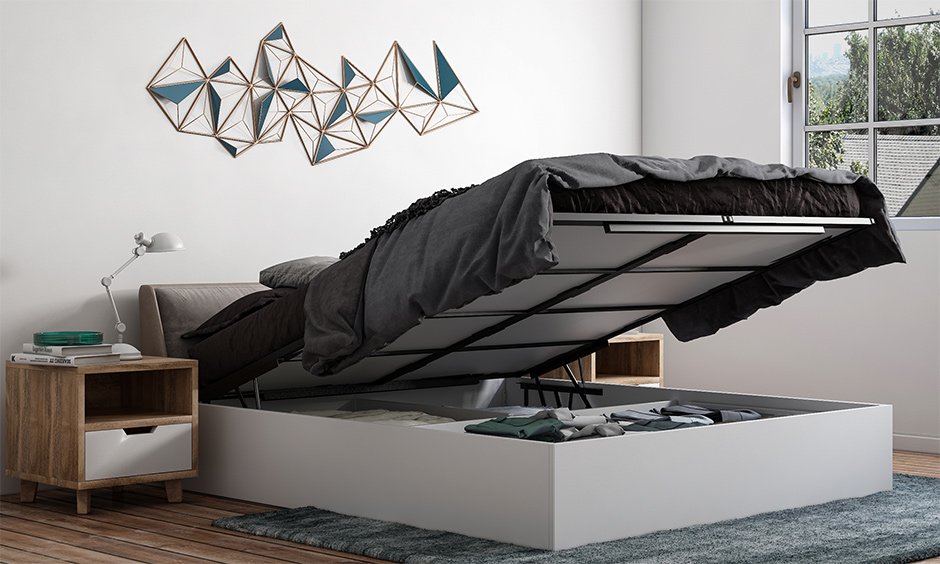
Ottoman or hydraulic lift beds utilize gas-lift pistons to elevate the entire mattress platform, revealing a vast, open compartment underneath the bed frame.
-
Maximum Capacity: Because the entire frame footprint becomes available storage, hydraulic lift beds provide the highest total volume of hidden storage space.
-
Enclosed Protection: Storage items rest within an enclosed base, keeping extra pillows, bulky duvets, and luggage protected from dust and light exposure.
-
Ideal Floor Plans: This design works exceptionally well in narrower bedrooms where surrounding furniture prevents drawers from pulling out horizontally.
Integrated Drawer Storage Beds
Drawer storage beds feature built-in pull-out compartments along the sides, footboard, or both. These frames are structured to keep items organized and immediately accessible.
-
Side Drawers: Typically arranged with two or four drawers along the lateral edges, side-drawer beds allow for daily access to clothes, shoes, and extra sheets.
-
Footboard Drawers: Ideal for rooms with limited side clearance, footboard drawers slide straight out into the pathway at the foot of the bed.
-
Deep Storage Compartments: Some models feature deep, heavy-duty sliding drawers built with smooth ball-bearing glides capable of holding heavier items like winter coats or books.
Open Cubby and Platform Bookcase Beds
Platform frames featuring open cubbies, sliding panels, or integrated headboard shelving combine display aesthetics with functional storage.
-
Visual Accessibility: Open cubbies allow you to display books, decorative baskets, or daily essentials within easy reach.
-
Headboard Integration: Storage headboards eliminate the need for traditional nightstands, featuring built-in shelving, cable management ports for charging devices, and small pull-out drawers.
Evaluating Material Quality and Structural Engineering
A storage bed holds significant weight, supporting the mattress, occupants, and stored belongings simultaneously. Selecting durable materials and sturdy construction ensures long-term safety and performance.
Solid Wood versus Engineered Wood
The frame material determines both the structural integrity and aesthetic longevity of the bed.
-
Solid Hardwoods: Frames crafted from solid oak, maple, walnut, or pine deliver maximum durability and weight capacity. They hold joinery securely over years of daily use and resist structural warping.
-
Engineered Wood (MDF and Particleboard): High-density Medium Density Fiberboard (MDF) with wood veneers offers a budget-friendly alternative with smooth surfaces and modern finishes. Ensure engineered wood options feature reinforced metal joints to prevent sagging.
Lift Mechanisms and Hardware Quality
For hydraulic and drawer beds, mechanical hardware dictates overall usability.
-
Piston Rating: Gas-lift pistons should be rated specifically to match your mattress weight. An underpowered piston will struggle to lift a heavy hybrid or latex mattress, while an overpowered piston may resist closing.
-
Drawer Glides: Look for full-extension steel ball-bearing drawer glides. Cheap plastic runners or wheels resting directly on the carpet tend to jam, track crookedly, or damage floor surfaces over time.
Spatial Planning and Room Clearance Considerations
Before purchasing a storage bed, careful measurement of your bedroom layout is necessary to ensure the unit functions seamlessly without obstructing traffic paths.
Measuring Drawer Extension Clearance
To use drawer beds effectively, calculate both the bed frame width and the total distance the drawers extend when fully opened.
-
Side Drawer Clearance: Leave at least 24 to 30 inches of open floor space beside the bed frame to slide drawers out completely and stand comfortably while retrieving items.
-
Nightstand Obstructions: Standard nightstands placed directly beside the headboard can block the uppermost side drawers. Consider purchasing beds with partial-length drawers or specialized offset nightstands designed for storage beds.
Evaluating Ceiling and Fan Heights for Lift Beds
While lift-up beds do not require lateral floor clearance, they do require vertical clearance.
-
Vertical Extension: Ensure the fully open height of a hydraulic lift bed clear any low-hanging ceiling fans, light fixtures, or sloped attic ceilings.
-
Mattress Weight Balance: Verify that your mattress fits securely within the frame lip so it does not slide off the top when lifted at an angle.
Maximizing Internal Organization and Maintenance
An unorganized storage compartment can quickly turn into a cluttered dumping ground. Implementing structured organizational habits keeps your stored items pristine and easy to locate.
Compartmentalization Strategies
-
Modular Storage Bins: Use clear, labeled plastic or fabric bins inside large hydraulic bases to group smaller items like accessories, shoes, or seasonal wear.
-
Vacuum Storage Bags: Compress bulky winter blankets, extra pillows, and heavy jackets using vacuum-sealed bags to double the usable storage volume inside drawers or lift bases.
-
Cedar and Moisture Protection: Place cedar blocks or silica gel packets inside enclosed storage bases to absorb excess humidity and deter insects from nesting in stored textiles.
Cleaning and Maintenance Practices
-
Routine Vacuuming: Dust naturally settles into lower bed frames. Vacuum out empty storage drawers and interior base floors every few months using a soft brush attachment.
-
Hardware Inspection: Periodically check and tighten frame bolts, corner brackets, and drawer slides to prevent squeaking and maintain structural alignment.
Frequently Asked Questions
Can I use a traditional box spring with a storage bed frame?
Most storage beds are designed as platform frames with built-in wooden slats or solid wooden decks, eliminating the need for a box spring. Placing a box spring on a storage bed adds excessive height, obscures headboard design, and can add unnecessary weight that interferes with hydraulic lift mechanisms.
Are hydraulic lift beds difficult to lift up with a heavy mattress on top?
No, high-quality hydraulic lift beds use gas-assisted pistons calibrated to lift heavy loads effortlessly. Once you initiate the upward movement, the gas struts assist with the heavy lifting, holding the mattress securely in the raised position until you manually push it back down.
Do storage bed drawers sitting close to the floor attract dust mites and insects?
Enclosed wooden drawers offer good protection against ambient dust, but because they rest close to the floor, dust can collect along the outer seams. Using sealed interior storage containers or vacuum bags and vacuuming under and around the bed regularly prevents dust accumulation and keeps pests away.
What should I do if my nightstand blocks my side storage drawers?
If space allows, you can opt for a storage bed with drawers located strictly at the footboard, or choose a headboard with built-in shelving to replace traditional nightstands altogether. Alternatively, wall-mounted floating nightstands positioned slightly higher allow side drawers to slide freely beneath them.
Can a storage bed frame support heavy hybrid or memory foam mattresses?
Yes, provided the frame features a strong center support beam, sturdy metal brackets, and slat spacing no wider than 3 inches apart. Always verify the maximum weight capacity specified by the manufacturer, taking into account the combined weight of the mattress, occupants, and stored items.
How do I prevent clothing stored under the bed from developing a stale smell?
Ensure all garments and linens are washed and completely dry before storing them. Avoid packing items too tightly, and place breathable fabric storage boxes, cedar inserts, or natural lavender sachets inside the compartments to maintain fresh airflow and pleasant scents over long periods.
Are platform storage beds noisy or prone to squeaking over time?
Squeaking usually occurs when wooden slats shift against metal frames or when frame bolts loosen over time. Choosing a bed with felt-padded slat supports, tight joinery, and periodically tightening all hardware ensures your storage bed remains quiet and stable during use.
Comments are closed.